
The Visual Guide
Seed | Bloom | Flight
Antonietta Positano, illustrator
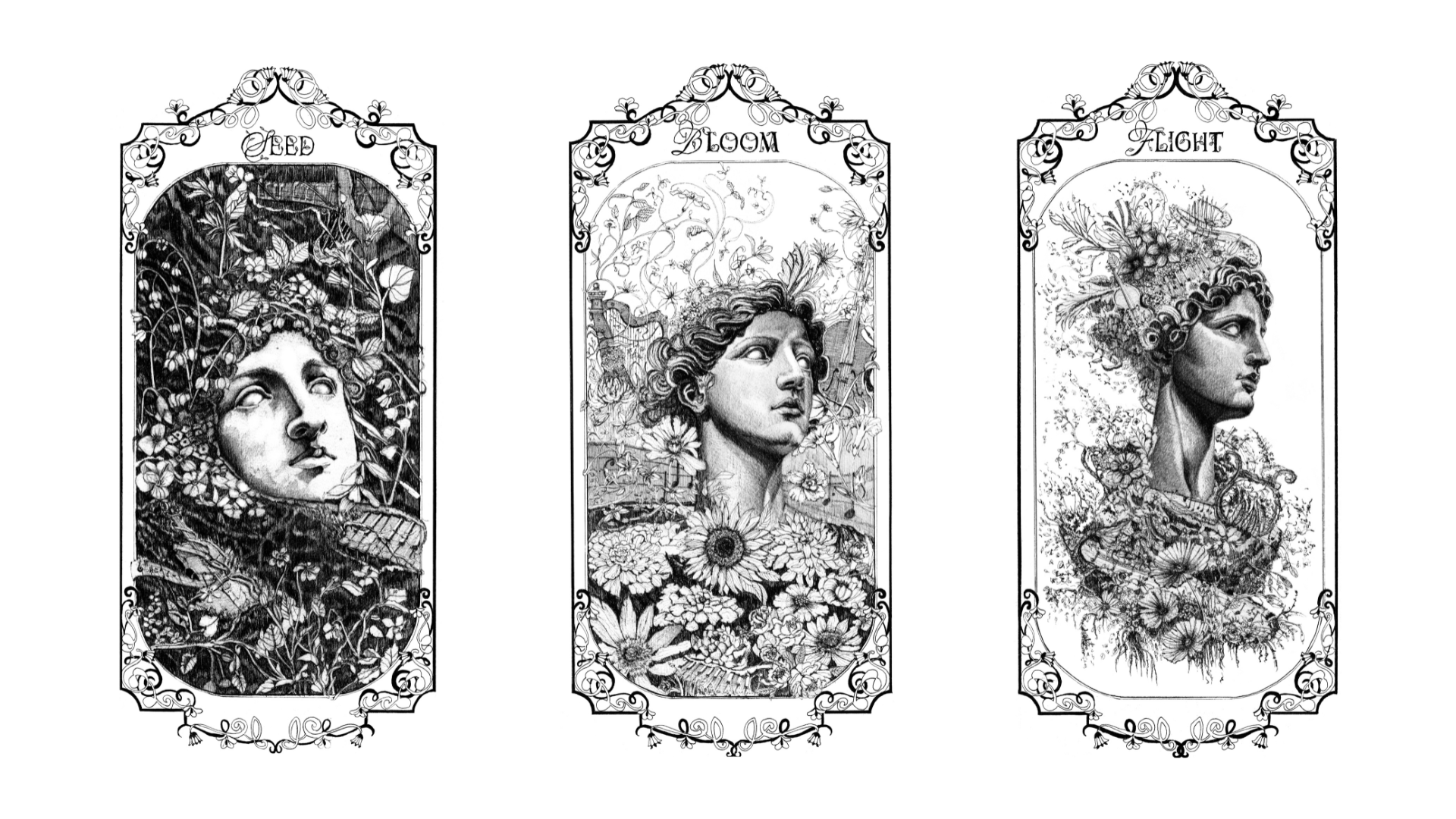
The visual narrative for Season 1: Seed | Bloom | Flight consists of a unified triptych of highly detailed black and white illustrations that explore the relationship between nature, music, and transformation.
This unified system reflect how the three concert phases are experienced as an evolving story.
Each illustration represents a different stage in the natural and symbolic cycle.
Seed: origin and grounding
Bloom: growth and full expression
Flight: transformation and release
At the center of this system is the female figure.
She represents a generative force, a connection between material and immaterial, and a bridge between nature and music.
Seed
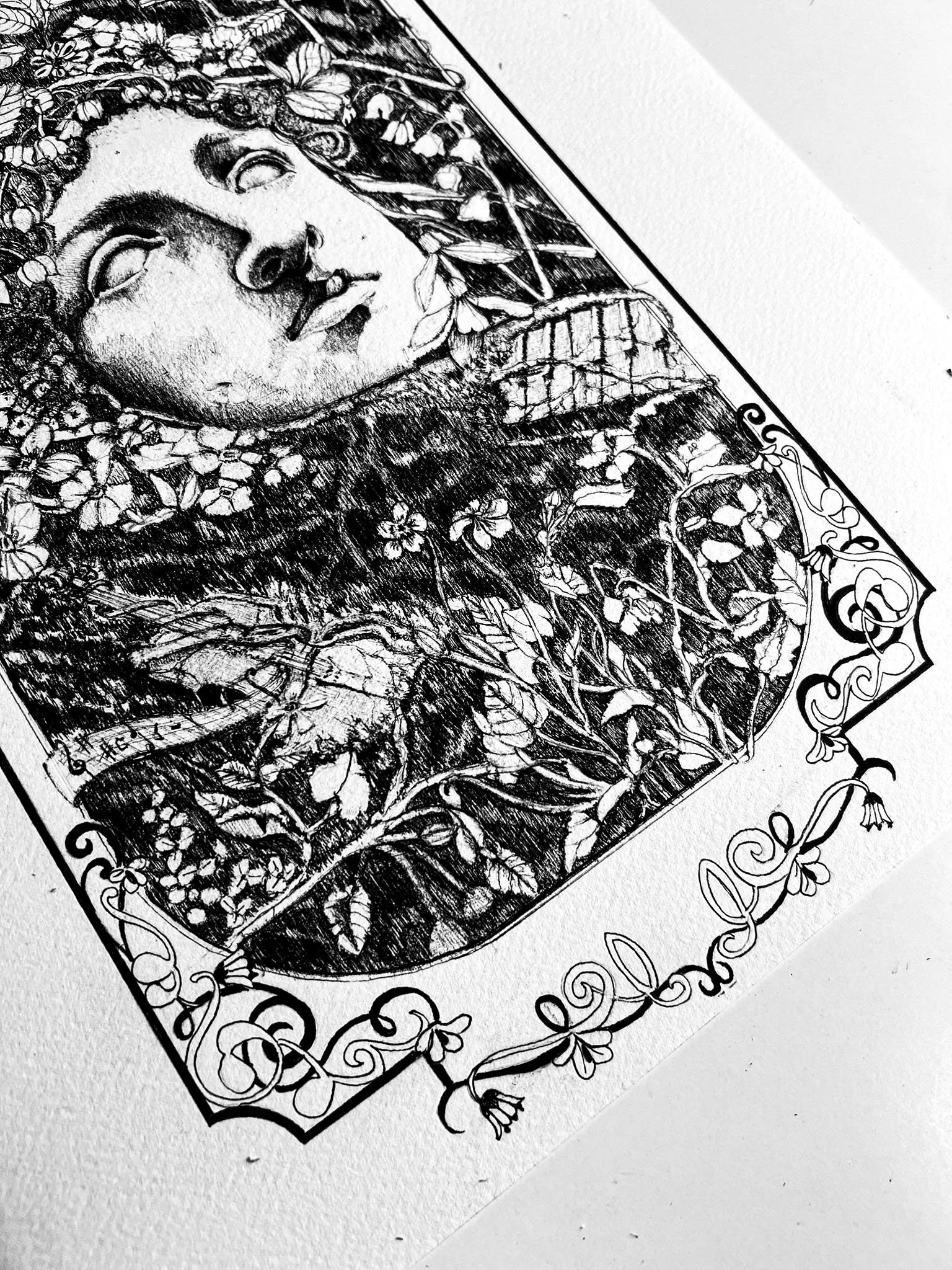
In Seed, the scene unfolds beneath the surface. The female figure is partially embedded in the earth, capturing the moment of belonging before she emerges. A dense network of roots expand around and through her form, creating depth and tension as a visual metaphor for musical organicism. Fragments of musical instruments appear partially buried. Everything is drawn downward, emphasizing origin and potential.
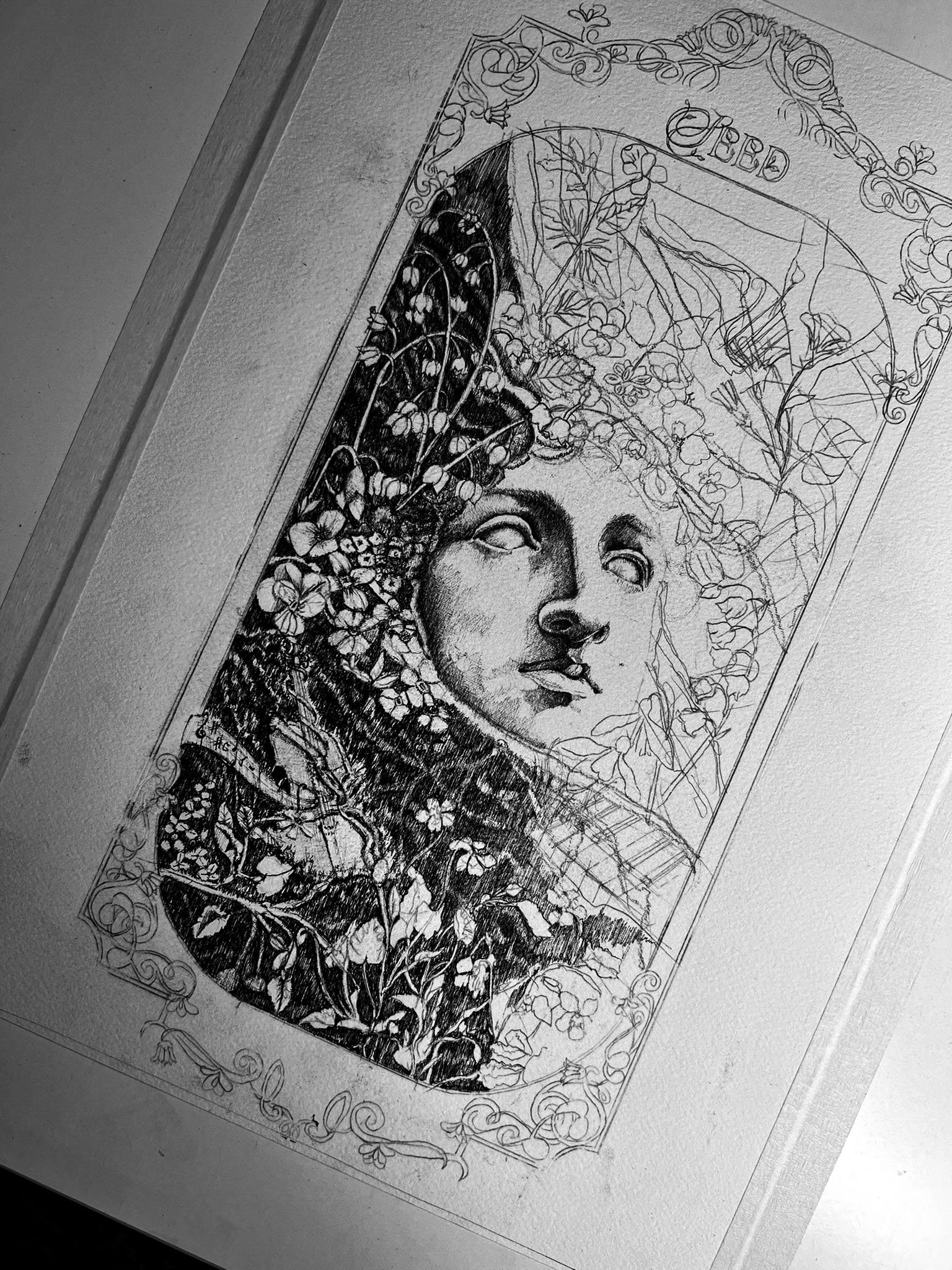
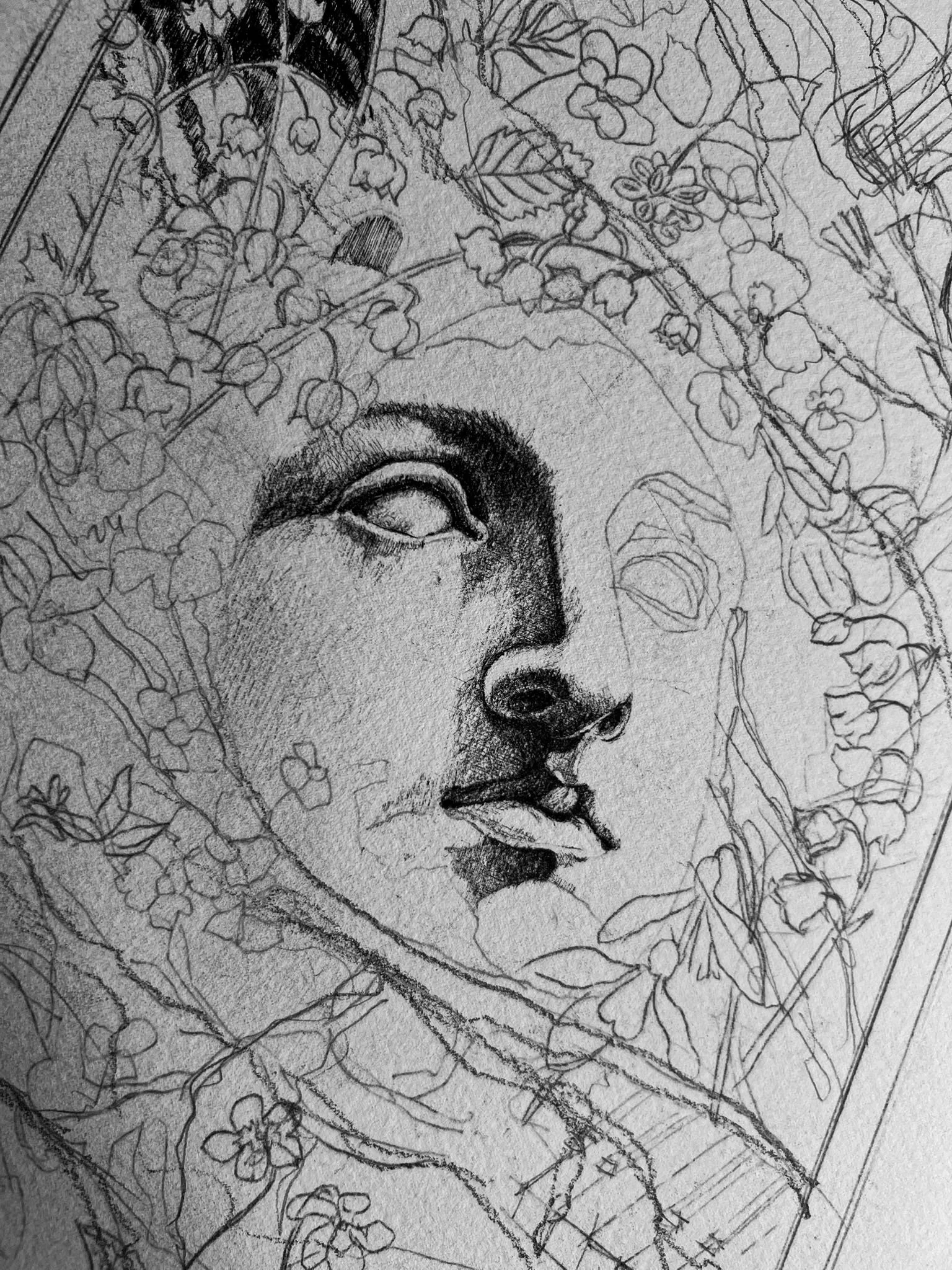
This structural expansion is mirrored in the three-leaf structure of clover (Trifolium) as dual homage to the piano trio (violin, cello, piano) and Gabriela Ortiz’s Trifolium. Clover carries nitrogen fixing qualities, here symbolizing the regenerative potential of the earth. The three-leaf structure is carried through Spring flowers: lily-of-the-valley, violas, and snowdrops.
The composition reads across five layers from total shadow to full light concentrated on the statue’s face. The flowers are kept in a line drawing, almost white, to echo the feeling of Art Nouveau stained glass. They are sightly suspended from the darkness and, at times, they intentionally break out of the frame.
“In Seed, the figure is still buried, almost hidden but still powerful. Like the music of these historical women composers, she exists beneath the surface before being fully brought back into visibility.”
Bloom
In Bloom, the composition opens and becomes fully present. The surrounding vegetation grows in a rich and layered way with large, expressive flowers forming a dense base that supports the entire composition. The air begins to dissolve into stems and blossoms to blur the boundary between the human form and the natural. The image conveys a sense of fullness and balance. The form has more of a defined femininity to emphasize the historical connection between floral imagery and femininity.
The visual abundance in this piece reflects the programmatic depth of two floral cycles by Amy Beach and Dora Pejačević. The artwork’s dissolution from full, dense flowers at the base reflects the seasonal progression of flowers in Blumenleben by Pejačević. In From Grandmother's Garden, Beach uses the floral growth cycle to evoke a link between the past and her present. While the title suggests a sentimental look backward, the music is contemporary and forward-looking.
Flight
In Flight, the composition moves towards lightness and release. The figure becomes more vertical and drawn upward. Though the space around her opens, her face becomes more human and fully realized; she is suspended between being a woman and being part of nature. Elements begin to dissolve into finer parts around her form. The hair and upper shapes transform into seeds, filaments, and delicate structures carried by air. The vegetation becomes more minimal and linear; music breaks away from recognizable notes and becomes a suggestion of movement.
This sense of release and dissolution into pure line work is reflected in the final program, which features contemporary works that dissolve traditional structures.
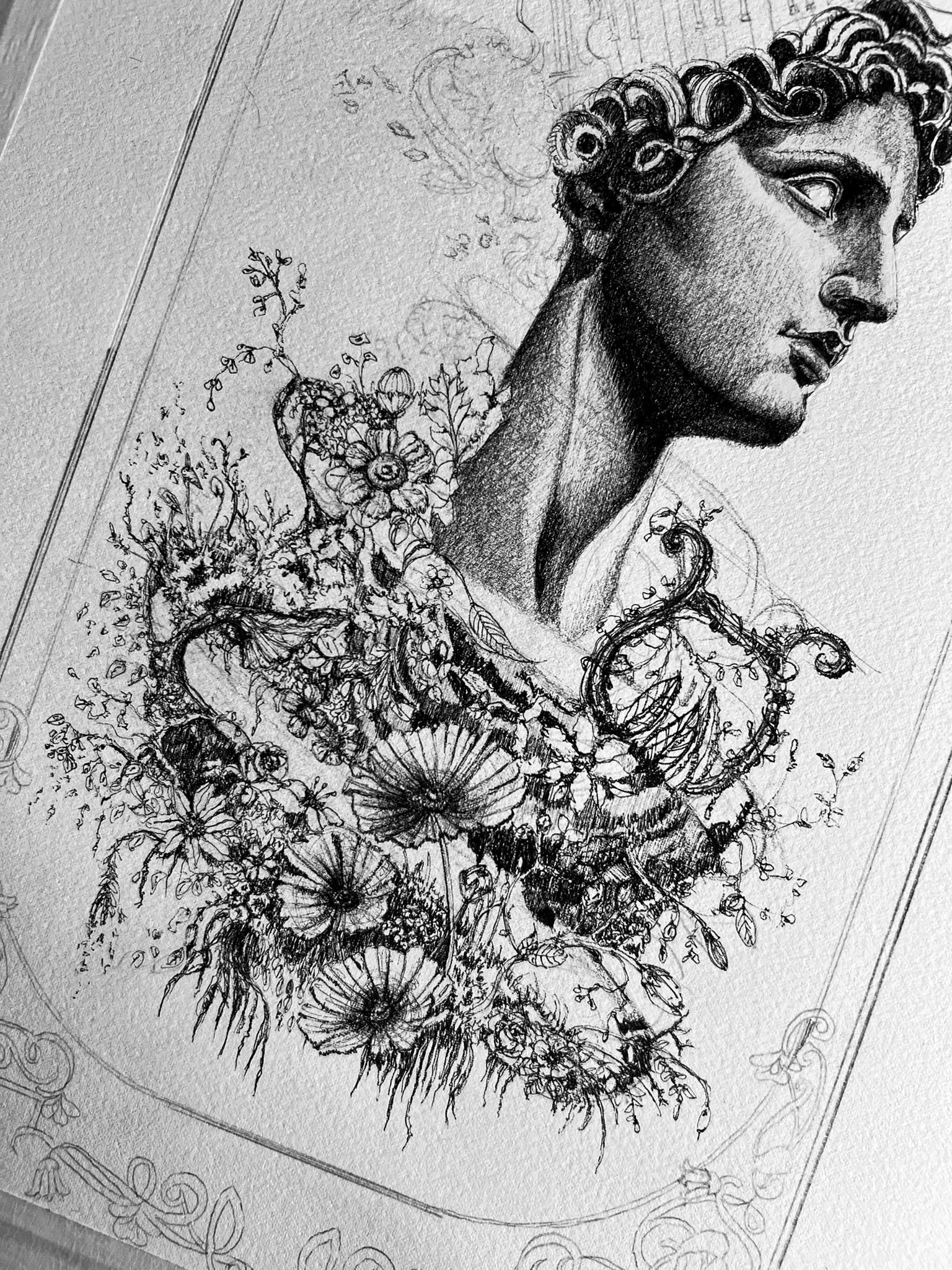
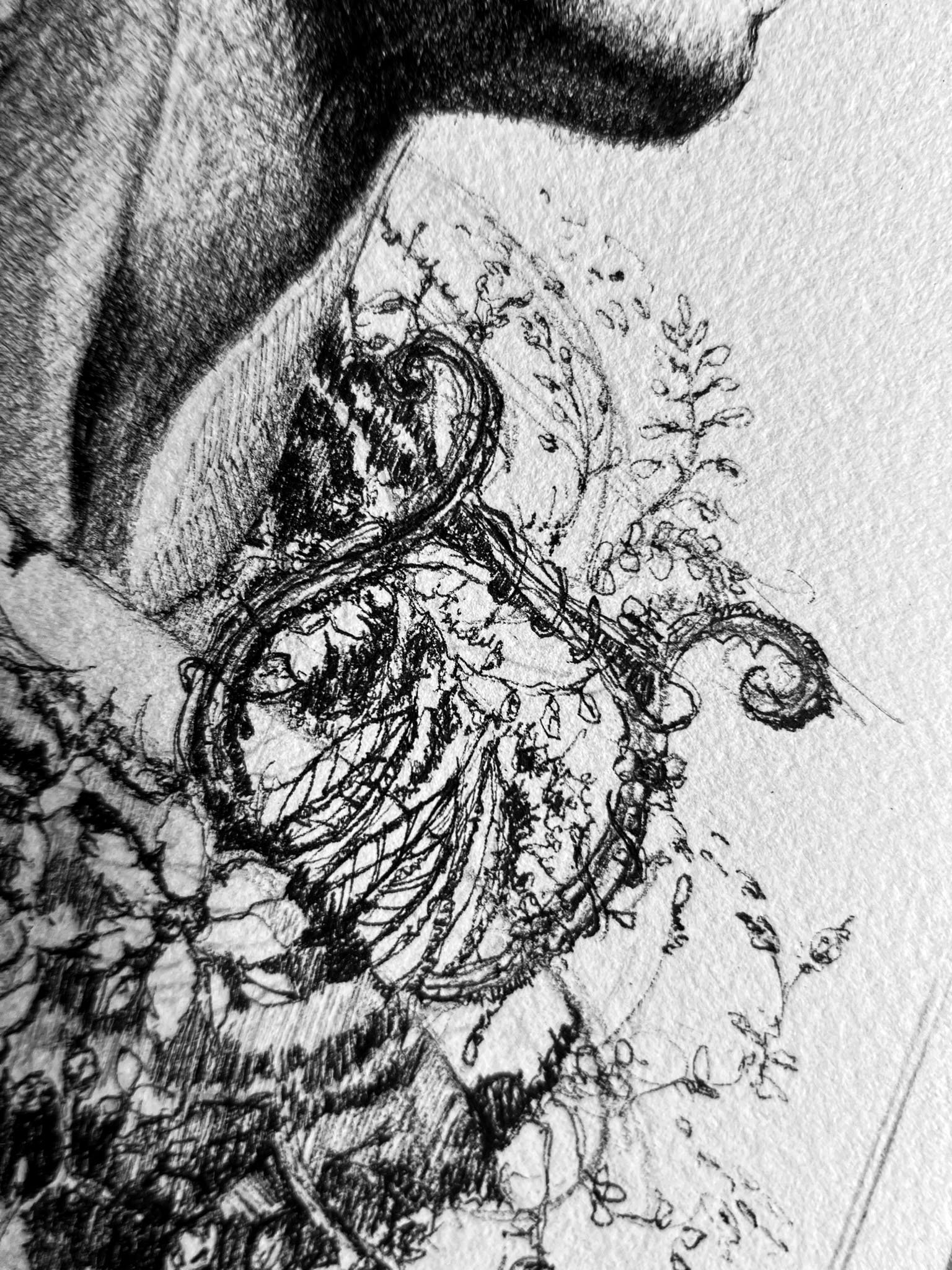
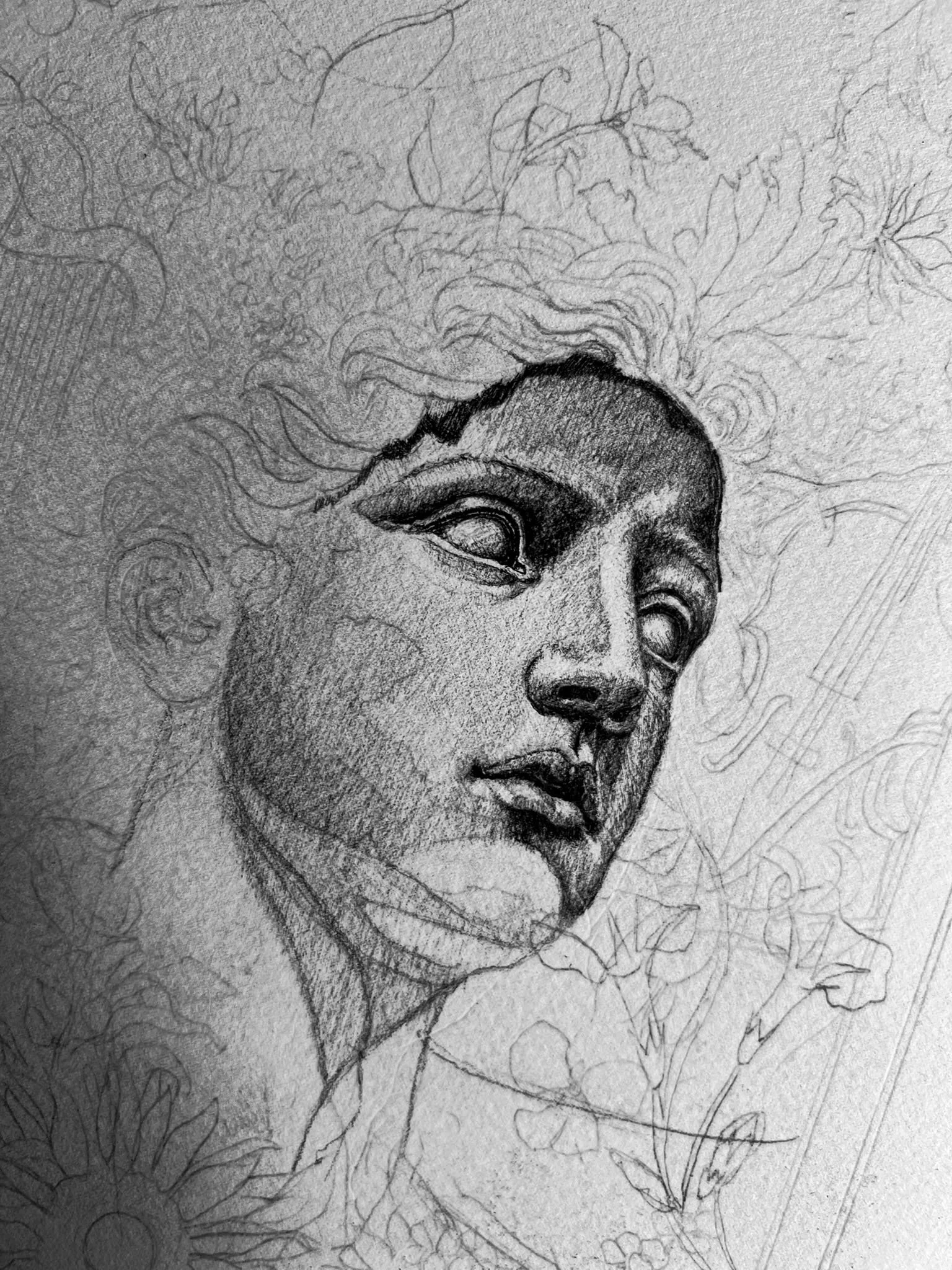
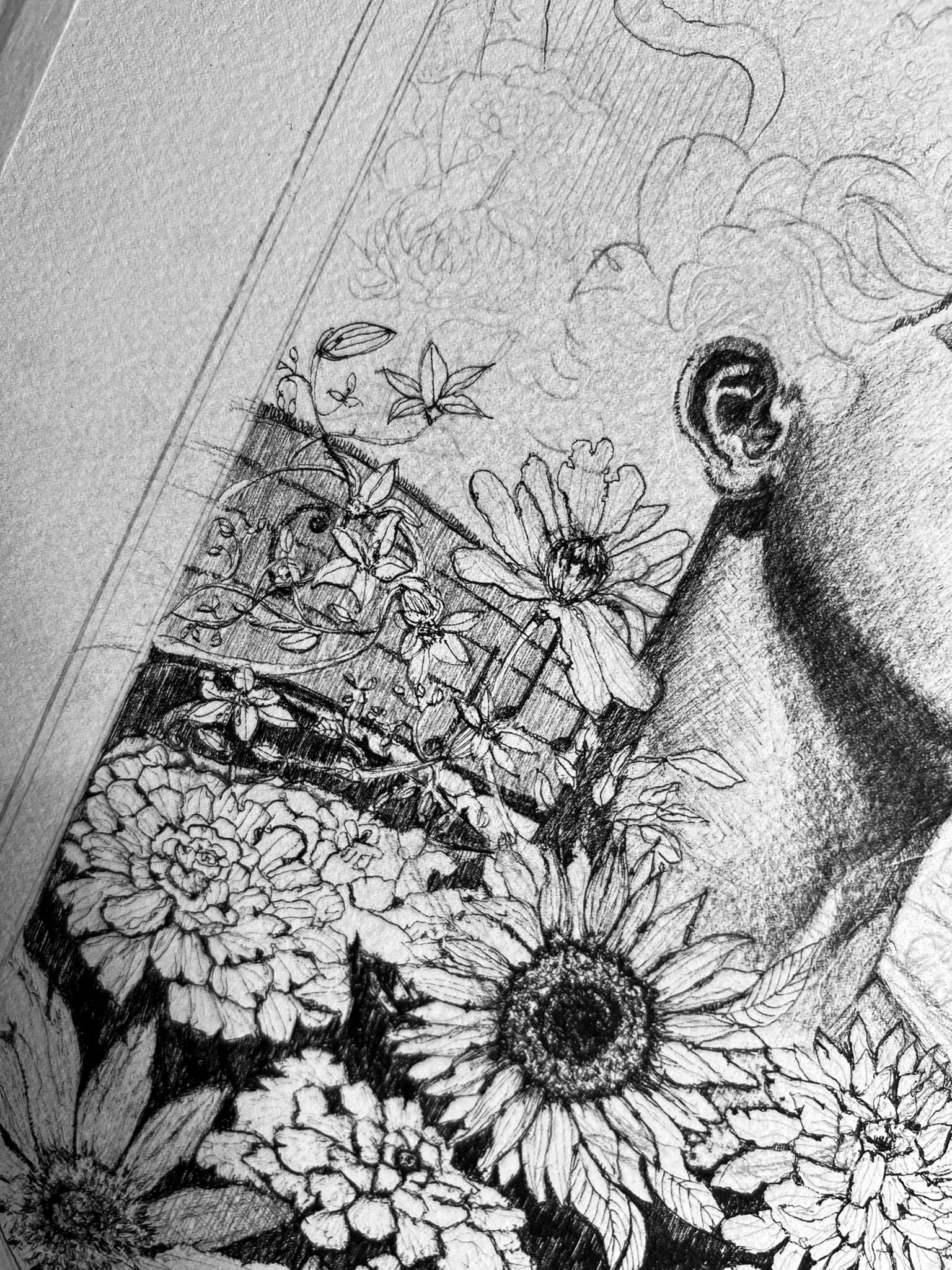
Sketches & Development
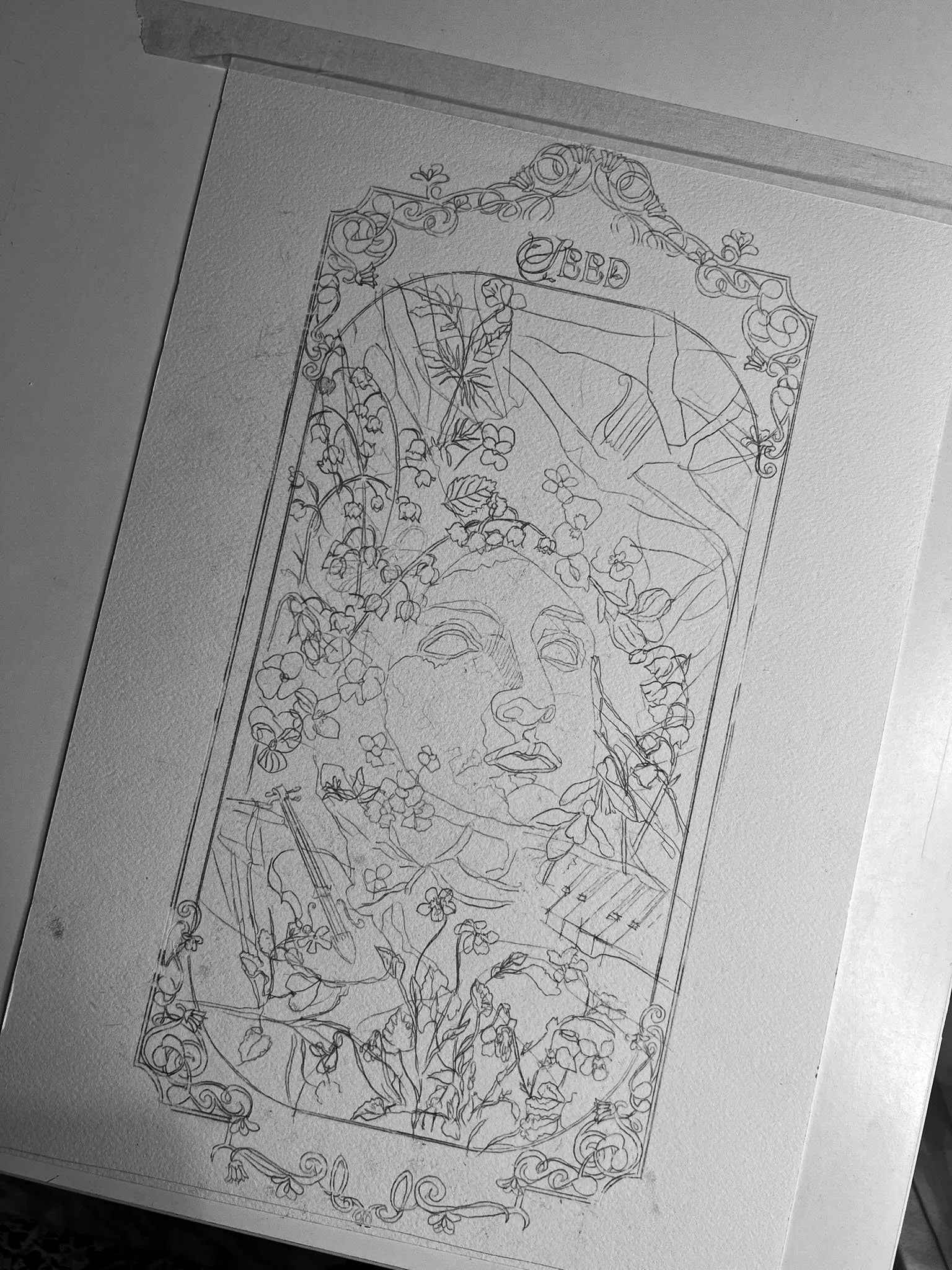
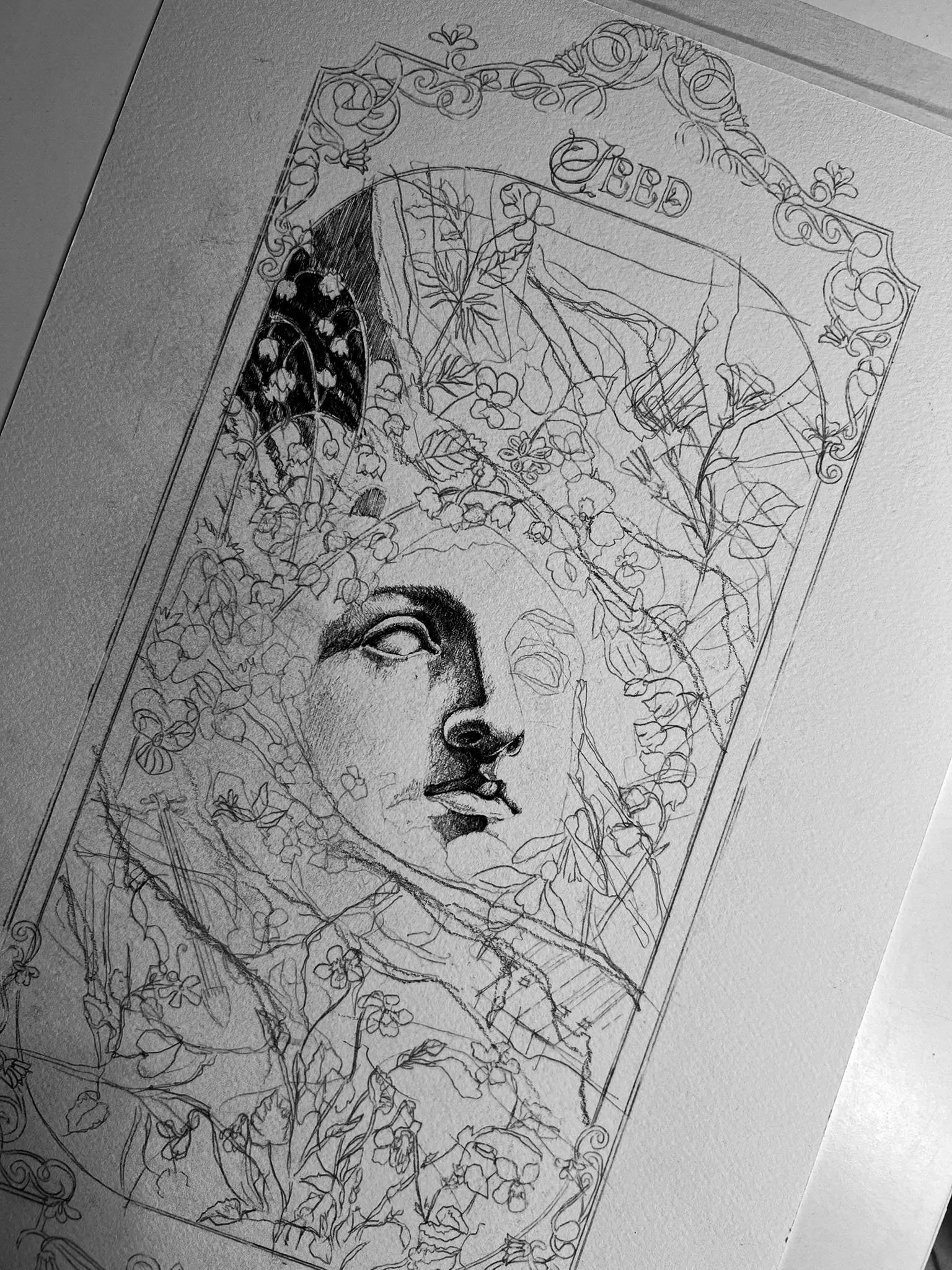
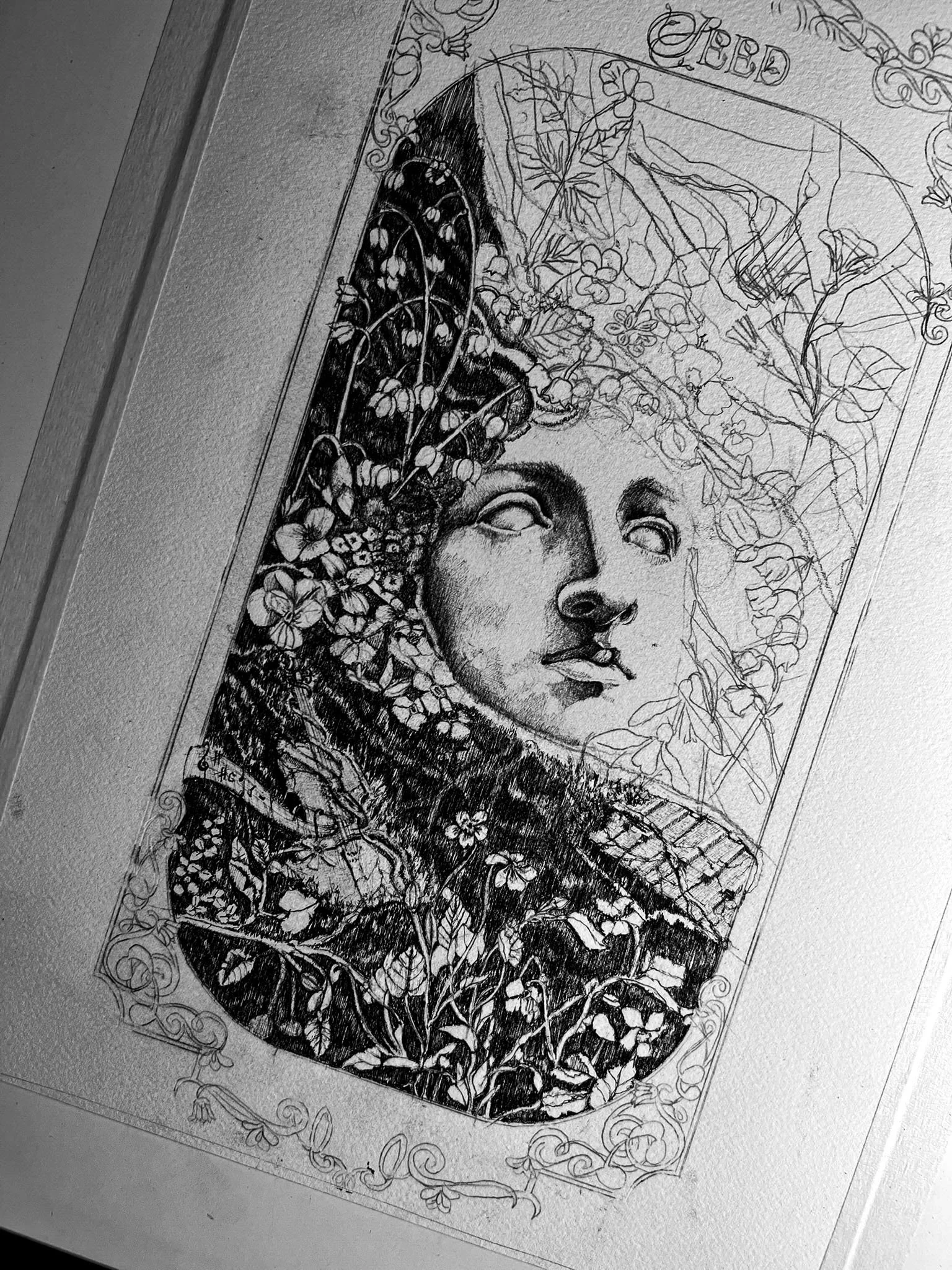
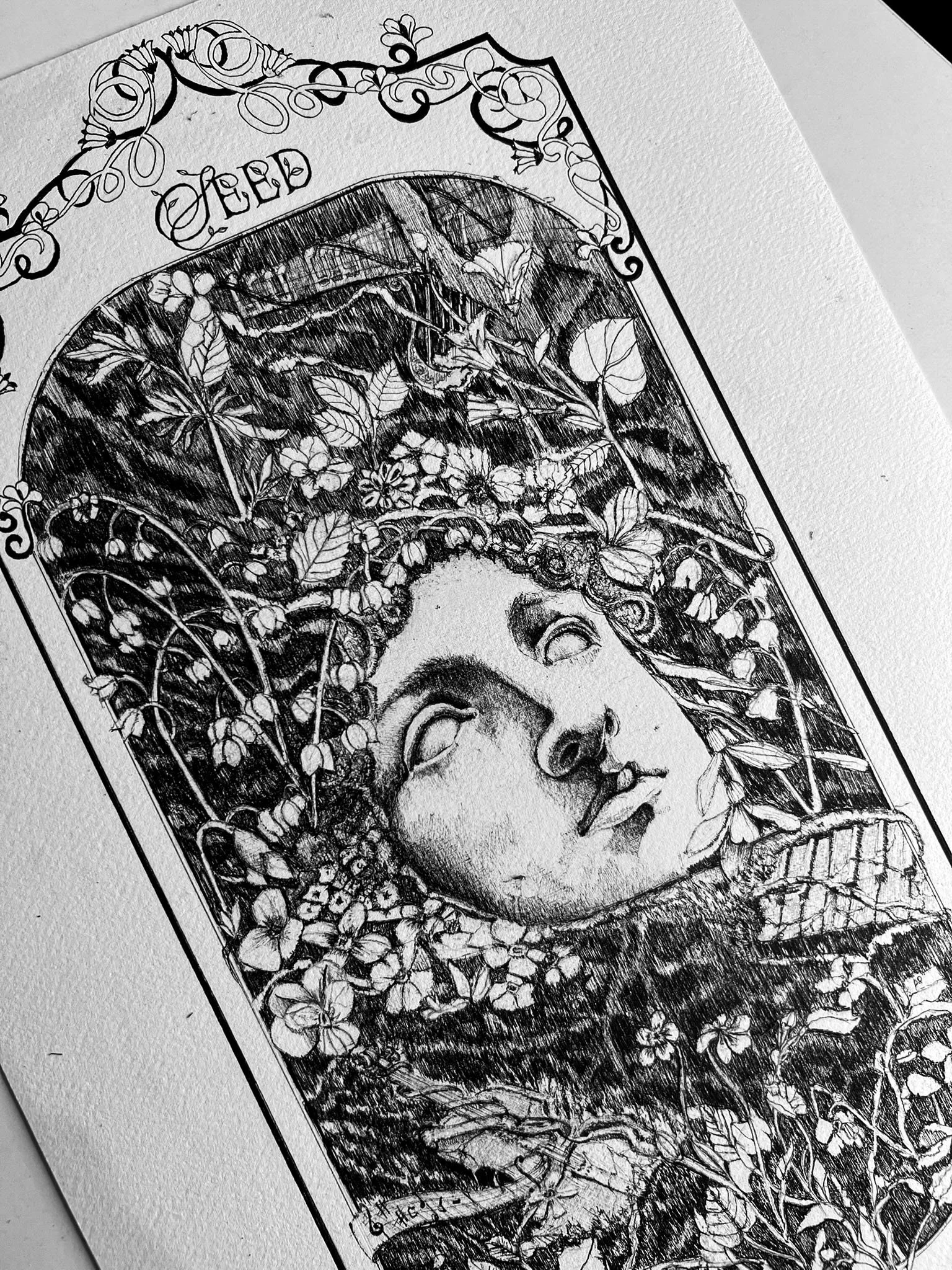
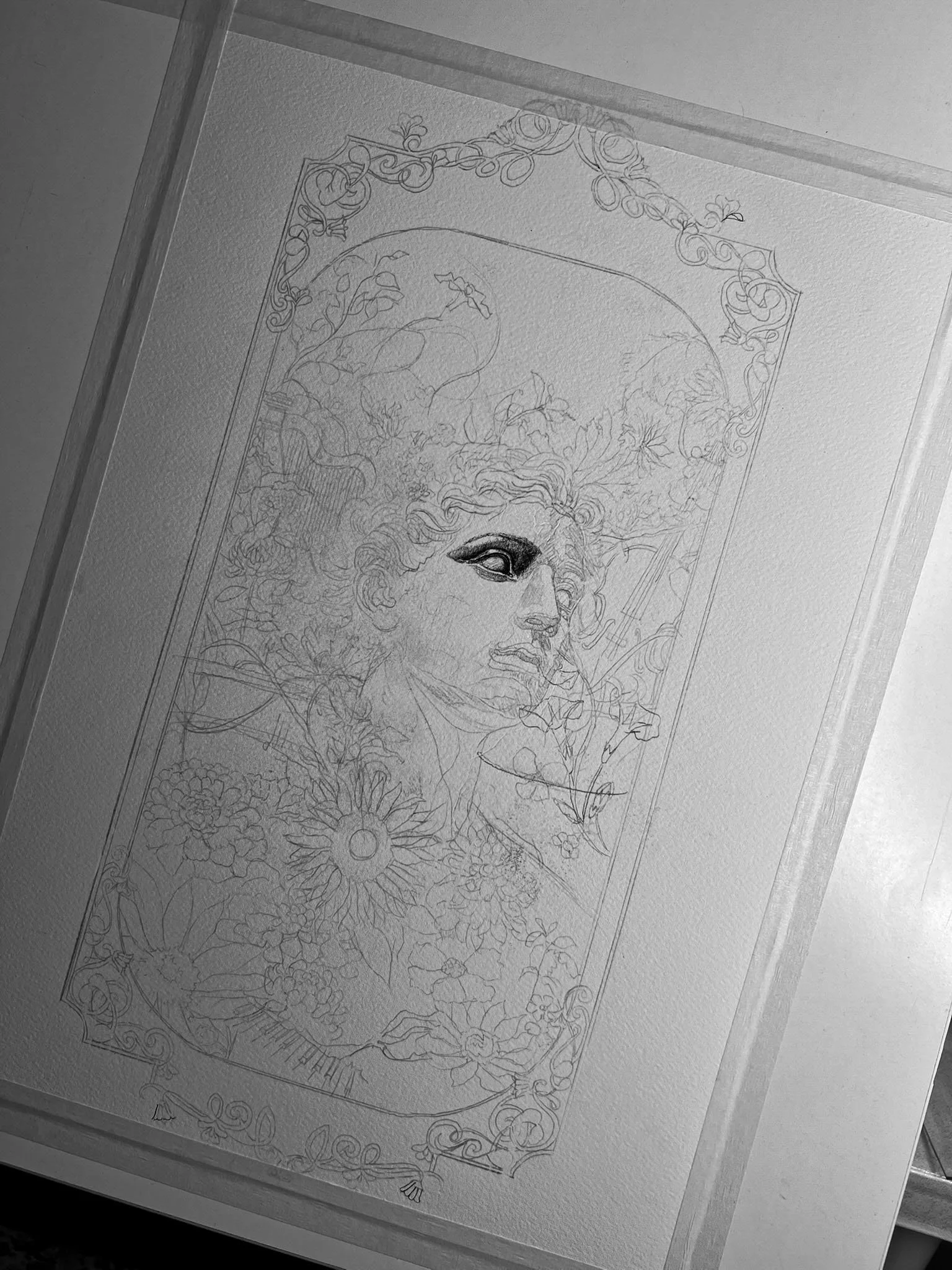
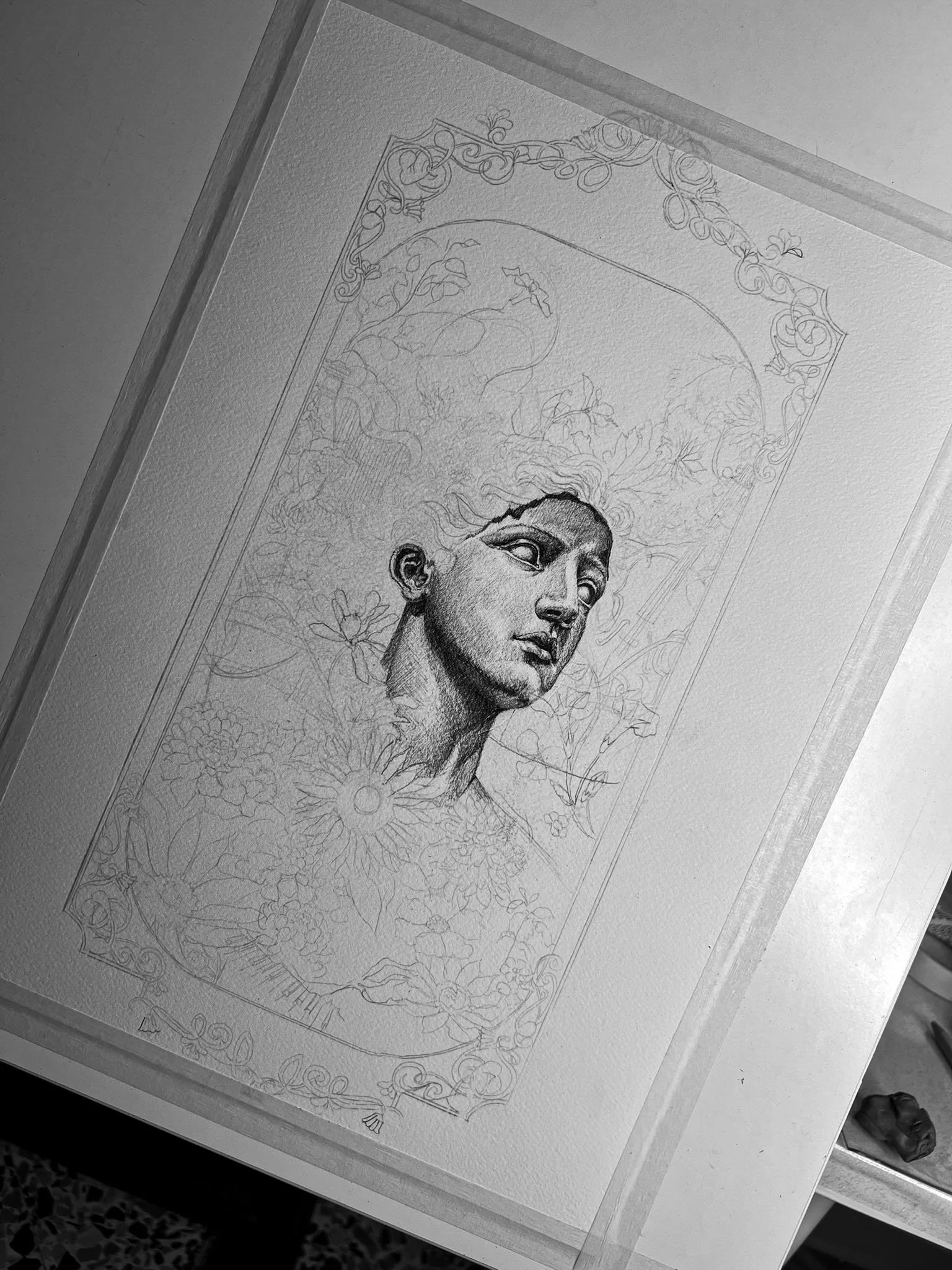
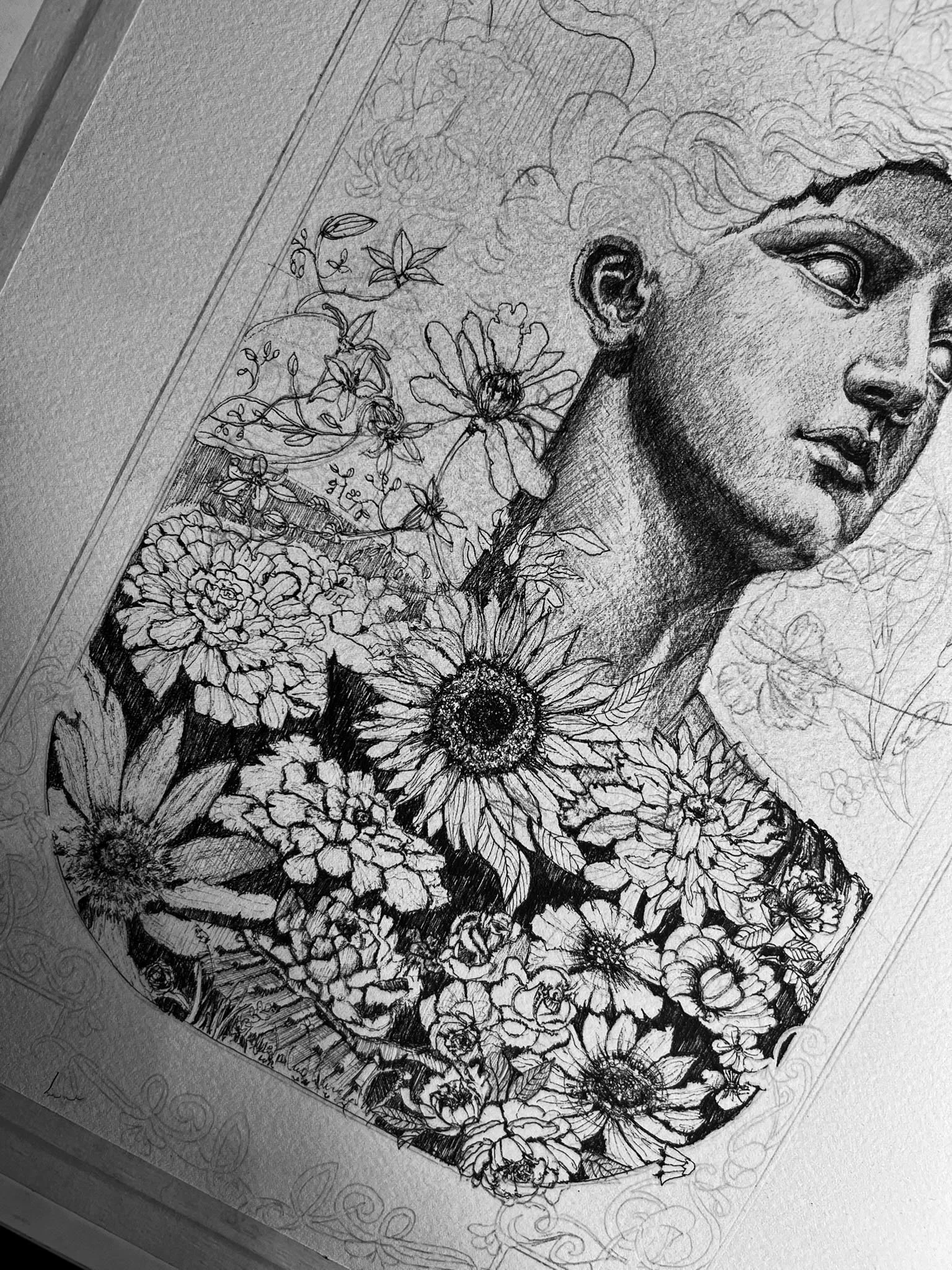
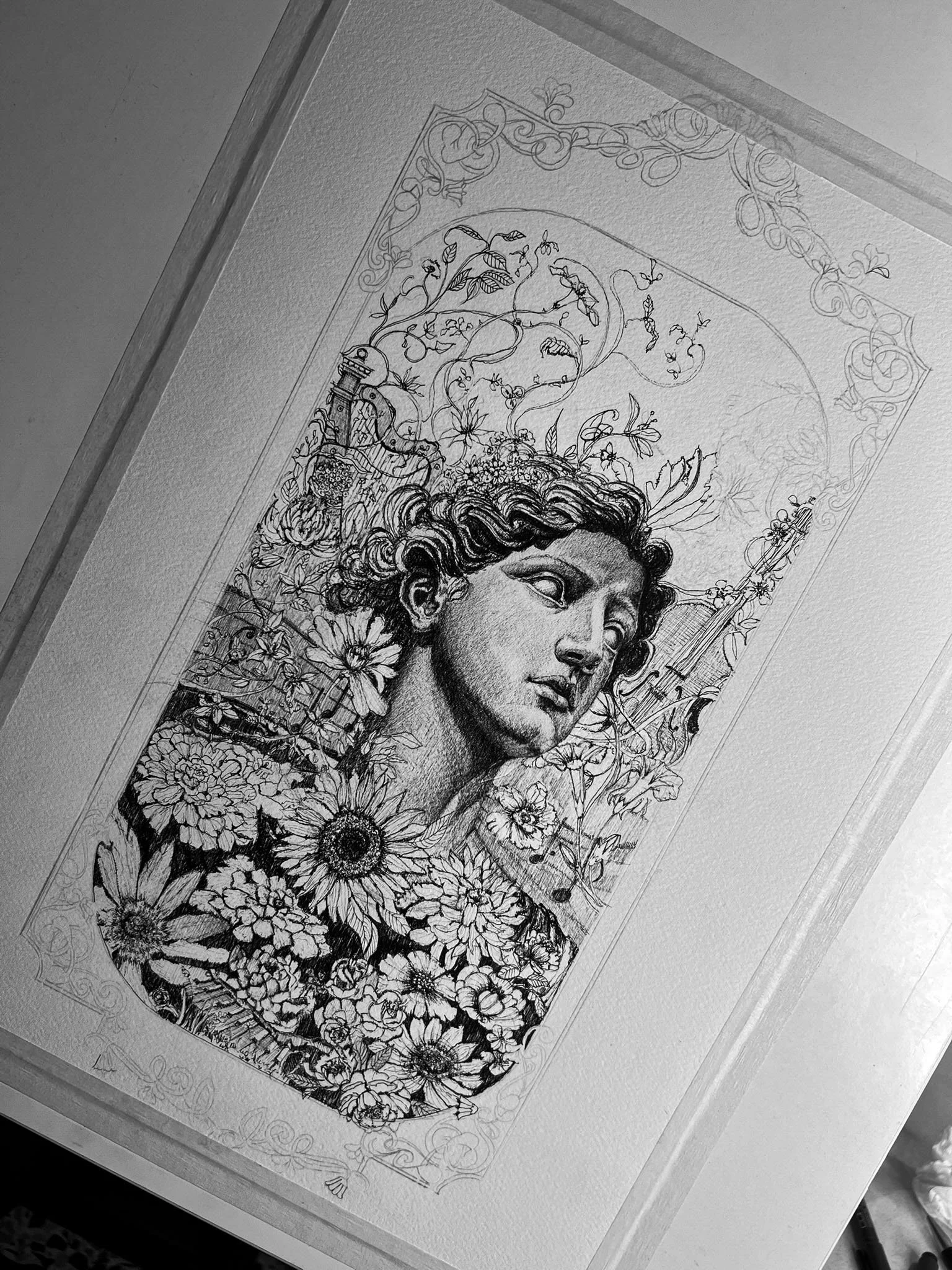
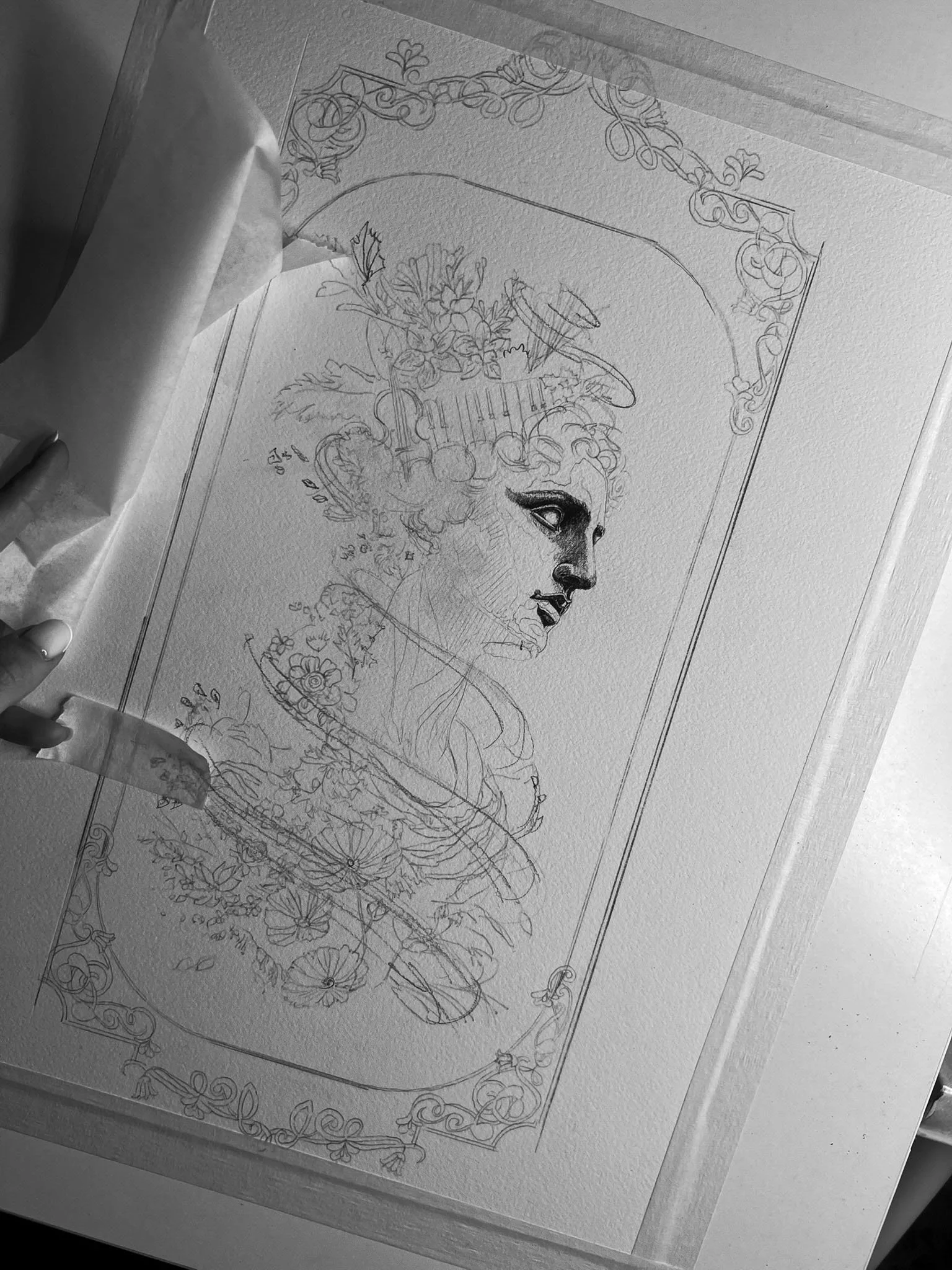
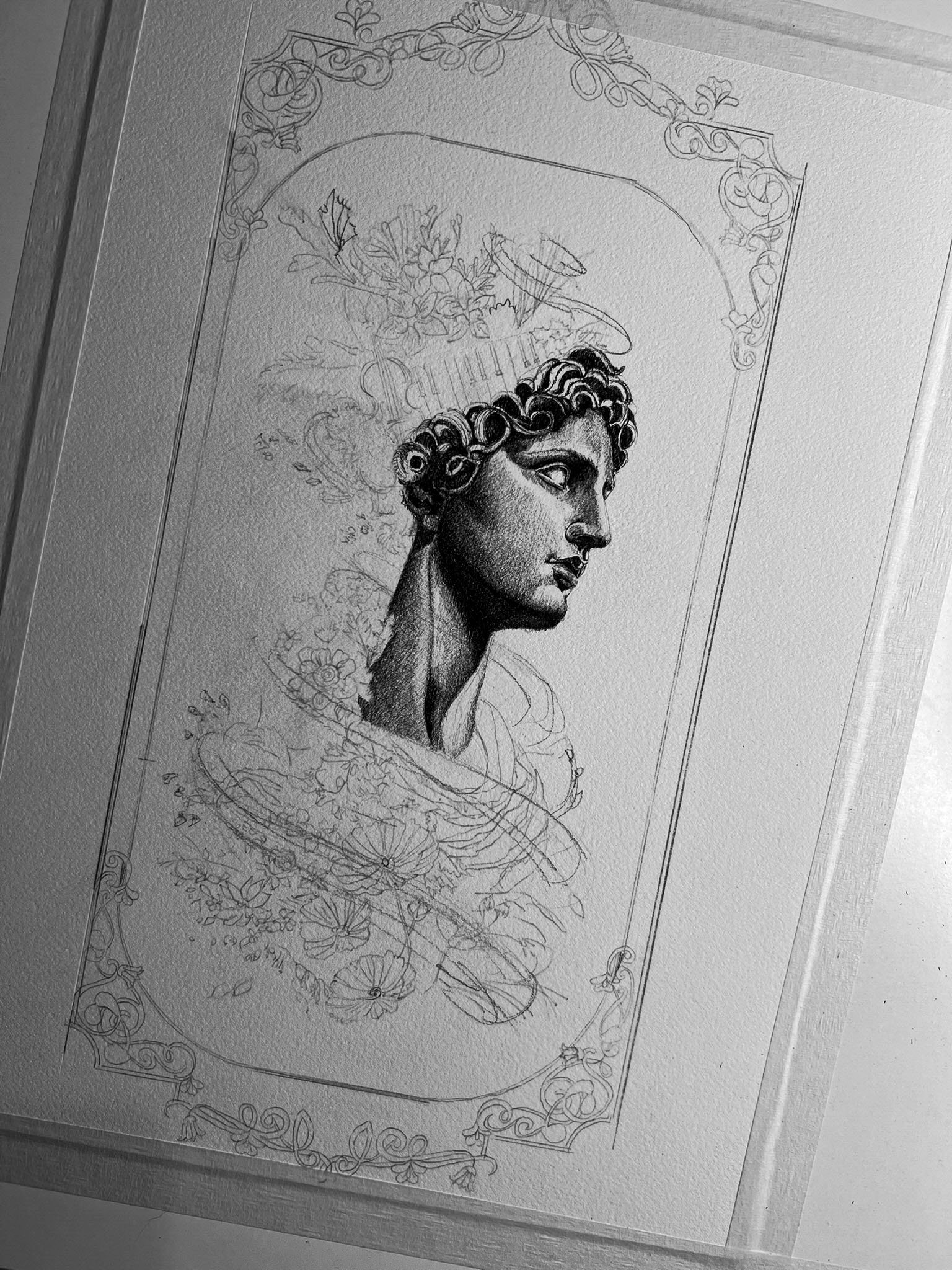
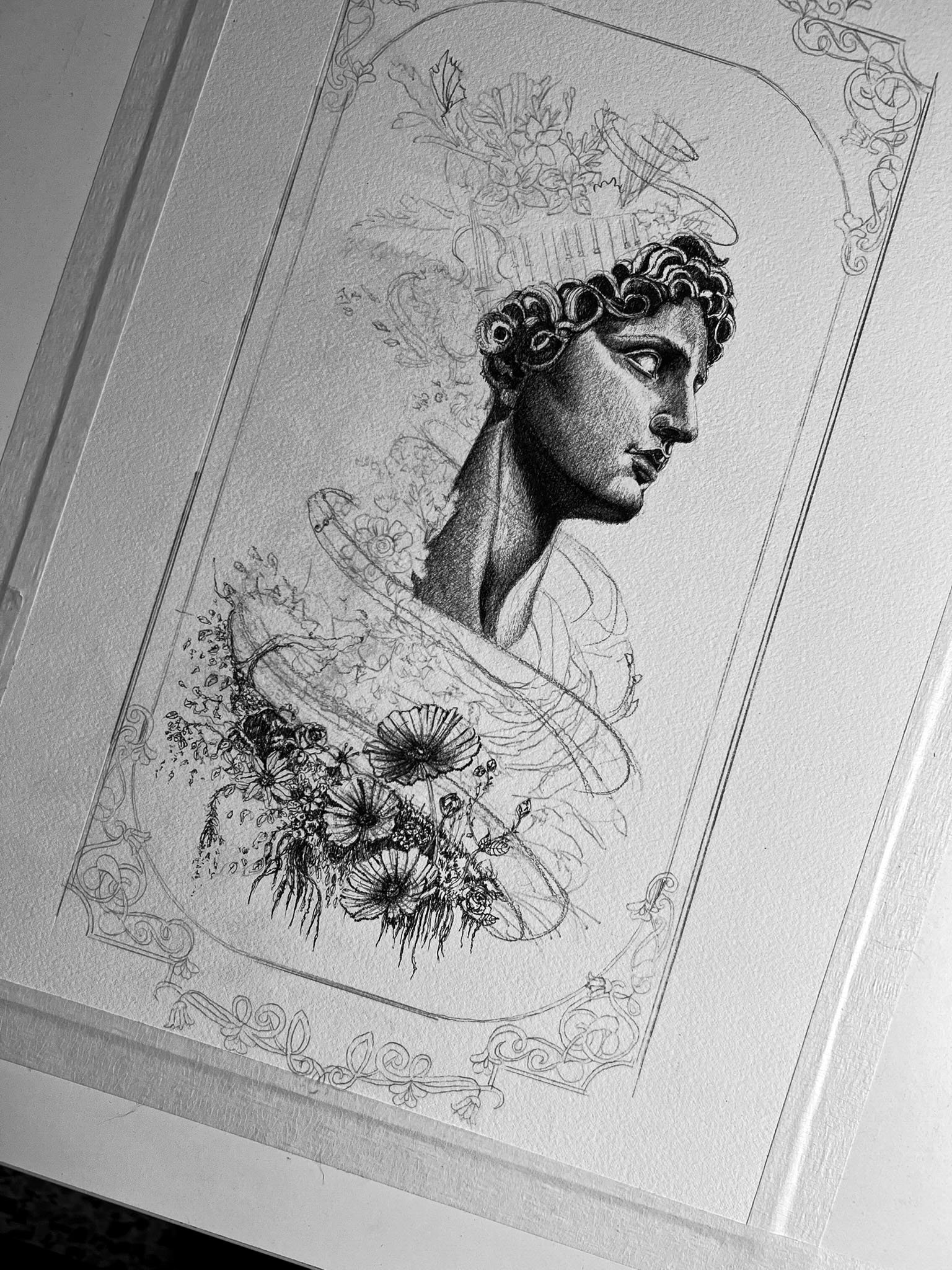
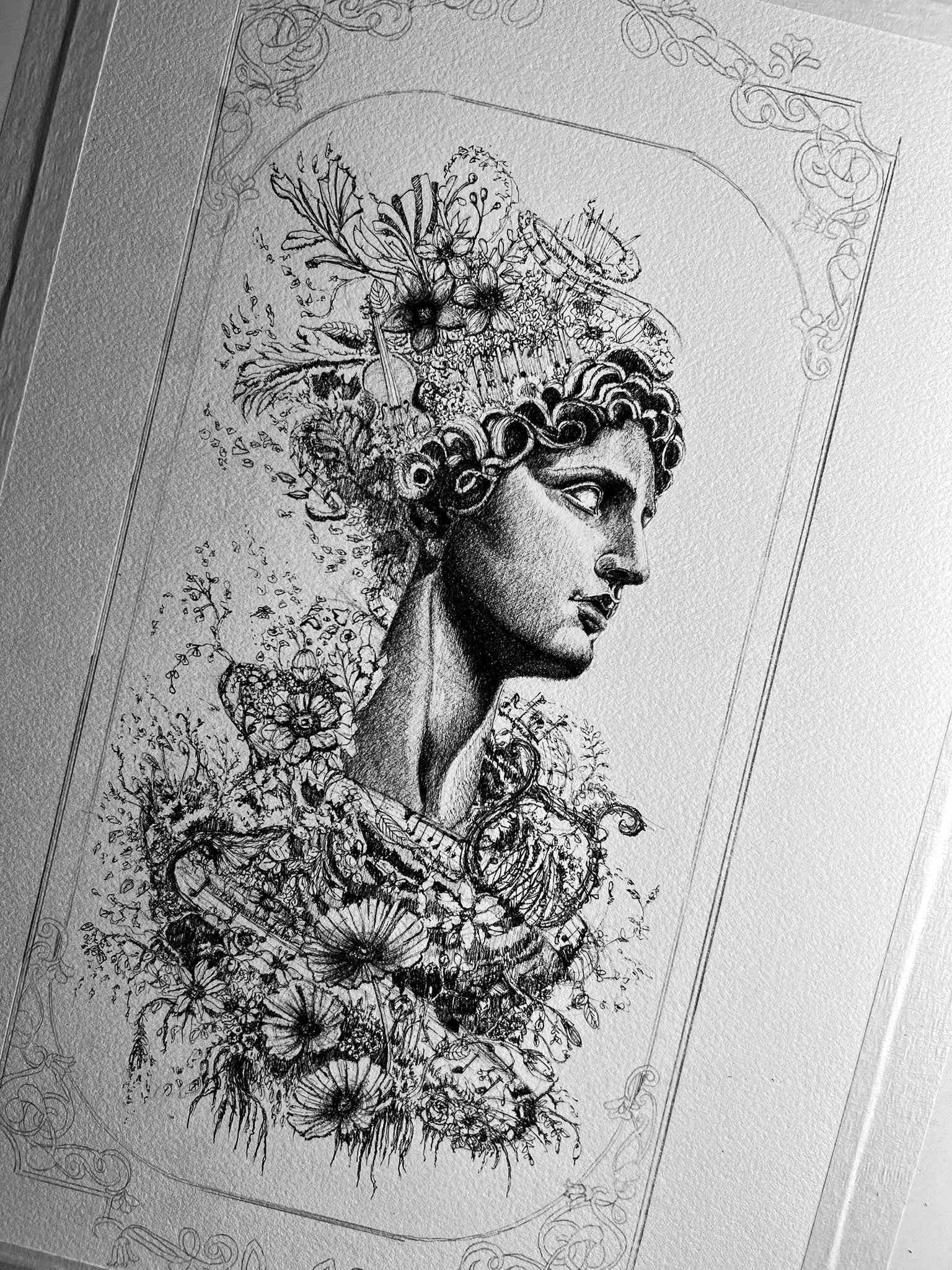
These illustrations interpret music through natural processes of growth, transformation, and renewal.
This visual arc mirrors the progression of the concert season: from nineteenth-century works featured in Seed, to the floral and programmatic miniatures in Bloom, and finally to the atmospheric and fully contemporary sound world of Flight.
The female figure serves as a unifying presence across the season, connecting historical and contemporary voices by women composers.
About the Artist

Antonietta Positano
IllustrationAntonietta Positano is an architectural illustrator and artist based in San Marzano sul Sarno, a quiet town in southern Italy just minutes from the Amalfi Coast. Growing up in a small place shaped her way of seeing, drawing her attention to what often goes unnoticed, from the way light wraps around a surface to the silent poetry embedded in architecture. She studied at the Art Institute of Salerno and is completing her degree in Architecture at the University of Naples “Federico II.” While formally trained, her practice has always been deeply rooted in observation and drawing, developed through over 15 years of working entirely freehand in ink. Her work, influenced by historical engraving techniques, explores the relationship between architecture, nature and transformation. In recent years, her research has expanded into watercolor, sculpture, anatomy, and landscape, not as a departure, but as a natural evolution of her visual language. She has collaborated with international studios and clients across Art, Architecture and publishing. For her, illustrating is not simply a practice, but a way of translating the invisible into form, revealing what would otherwise remain unseen.'